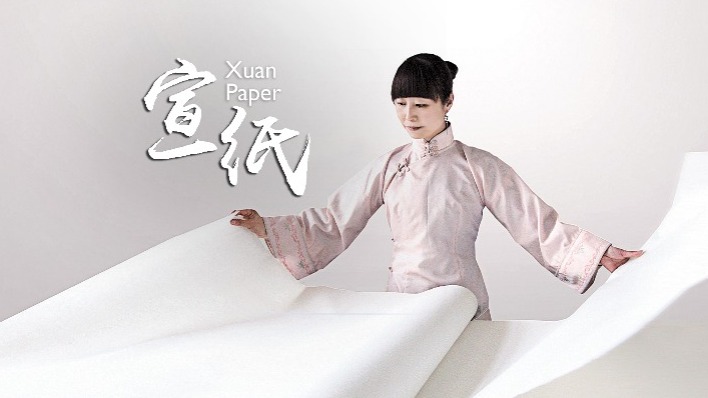
Xuan Paper
Introduction
Xuan Paper is a traditional Chinese paper renowned for its exceptional quality and versatility. It originates from Jingxian county in Xuancheng city, Anhui province. The paper is celebrated for its smooth yet tensile surface, which is ideal for calligraphy, painting and book printing. Recognized as a cultural treasure, Xuan Paper has played a crucial role in the preservation of Chinese art and literature, providing a resistant medium that has enabled the survival of ancient works through the centuries.
Historical Context
The term "Xuan Paper" first appeared in the book On Famous Paintings through the Ages, written by Tang Dynasty (618–907) scholar Zhang Yanyuan. During this period, Xuan Paper was listed as a tribute to the imperial court due to its supreme quality. The papermaking craft involves the meticulous processing of sandalwood bark native to southern China and rice straw, undergoing 108 procedures over the course of three years to produce the refined Xuan Paper. The art of Xuan Paper production was inscribed on UNESCO's Representative List of the Intangible Cultural Heritage of Humanity in 2009, highlighting its cultural significance and the skilled craftsmanship required for its creation.
Craftsmanship
The traditional craft of making Xuan Paper is demanding and intricate. The process involves steeping, washing, fermenting, bleaching, pulping, sunning and cutting, all meticulously performed by hand. The paper is made from the bark of the Tara Wing-Celtis or Blue Sandalwood tree, combined with rice straw. Artisans must master a multitude of steps, with the most skilled craftsman adept at only a limited number. The collaboration in Xuan Paper production is emphasized as each sheet is carefully evaluated for quality, with artisans specializing in different sections of the process for optimal results.
Characteristics and Uses
Xuan Paper is prized for its ability to absorb water and moisten ink, making it an ideal medium for the flowing ink techniques used in Chinese art. Its unique composition allows for the expression of artistic nuances in freehand ink paintings and calligraphy. The paper's durability and resistance to insects have preserved numerous ancient Chinese documents and artworks, serving as a testament to the lasting legacy of Chinese culture. The versatility of Xuan Paper extends to modern applications, including stamp production, book printing, and artwork restoration.
Modern Development
The production of Xuan Paper is a significant component of the economy in Jingxian county, employing a substantial portion of the local population. The craft is taught in local schools, ensuring its continuous inheritance to future generations. Various local workshops and companies, such as the China Xuan Paper Group, are recognized for producing authentic Xuan Paper, contributing to the industry's growth and sustainability.
Despite the challenges posed by digitalization and industrialization, the demand for handmade Xuan Paper persists, supported by a renewed interest in traditional arts and crafts. Artisans and companies have embraced opportunities to innovate while preserving the traditional techniques, expanding the use of Xuan Paper into new cultural and creative products. This includes foldable lanterns, paper umbrellas, and other artistic installations, reflecting the material's enduring appeal and adaptability. The modern art world continues to draw inspiration from Xuan Paper, as seen in contemporary installations and artworks that challenge traditional forms while honoring the historical significance of the paper.








